


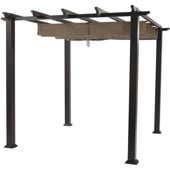
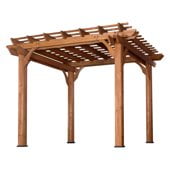
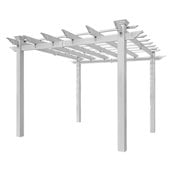
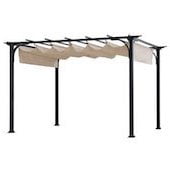
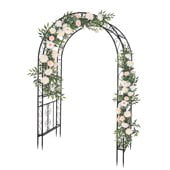
Covered Pergolas & Pergolas with Canopy | Walmart


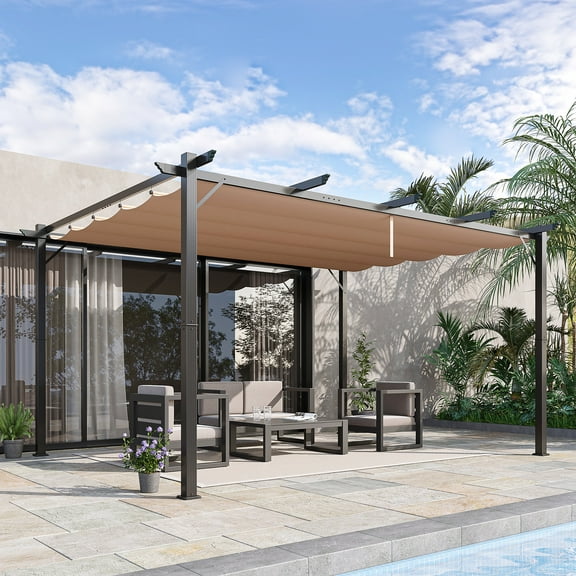
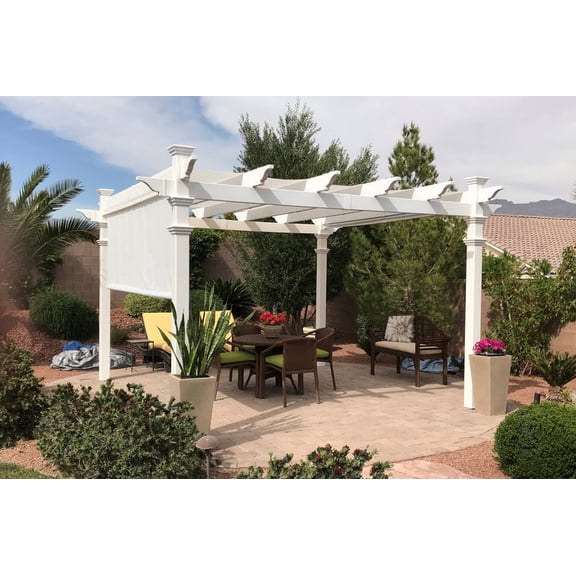


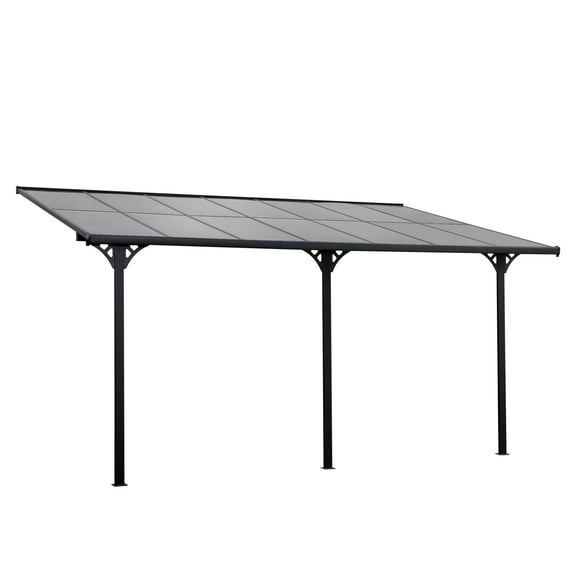



About Covered Pergolas & Pergolas with Canopy | Walmart - Walmart.com
You can create dependable outdoor shade with a covered pergola that fits your patio, deck, or backyard layout. You’ll notice this category gives you overhead coverage, open-air style, and more structure than a simple canopy.
When you compare covered pergolas, you should focus on shade type, frame material, mounting style, and weather readiness. You’ll make a clearer choice when you match those details to your space and how often you entertain outside.
How to choose a covered pergola
You should start by measuring your open area and noting where afternoon sun hits hardest. You’ll also want to check nearby walls, railings, and furniture so your pergola fits without crowding walkways.
As you narrow options, you should compare how much overhead coverage you want during meals, reading, or outdoor gatherings. You’ll usually find more targeted shade than a lattice-style pergola offers, especially during peak sunlight.
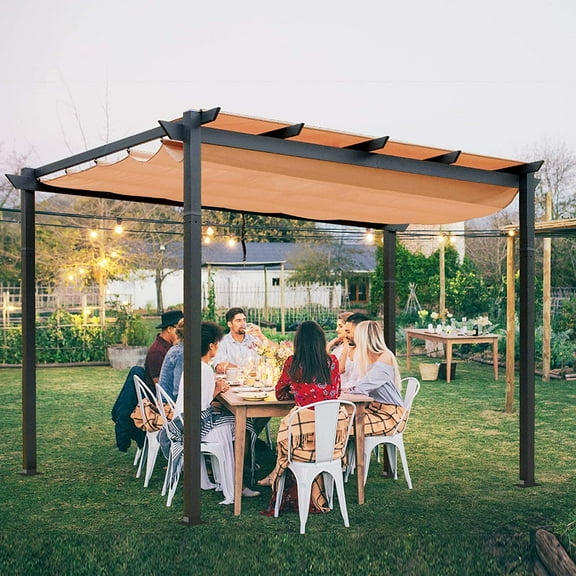
- You can create a defined seating zone for dining sets, sectionals, or fire pit chairs.
- You’ll get more consistent overhead shade for decks, patios, and poolside lounging.
- You can match frame finishes and roof styles to modern, rustic, or traditional outdoor spaces.
- You’ll often gain a sturdier backyard focal point than a lightweight canopy tent provides.
If you host often, you may want coverage that keeps the table area shaded longer through the day. If you relax solo, you might prefer a smaller footprint that frames a reading nook.
Choosing a pergola with sun shade
You should compare retractable canopy, fixed roof, louvered, and sun shade designs based on how flexible you want the coverage. You’ll get different light control, airflow, and maintenance needs from each option.
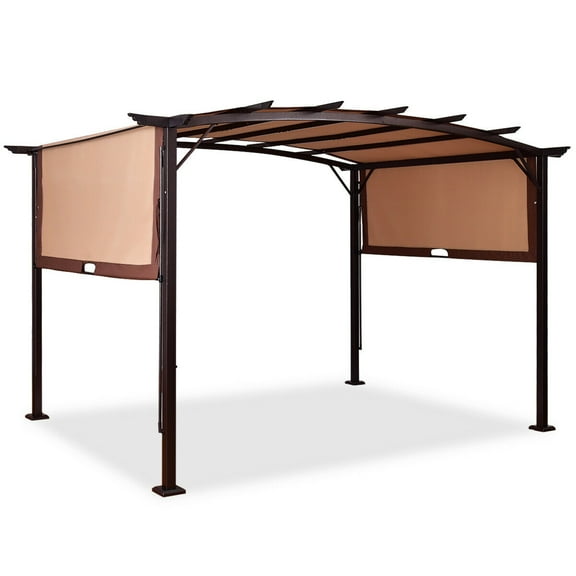
With a retractable canopy, you can open the roof for sky views or pull it closed for stronger shade. With a fixed roof, you’ll get constant coverage that works well over dining sets.
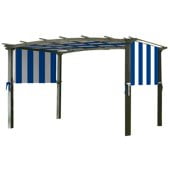
If you choose a louvered style, you can adjust the slats to manage sun angle and ventilation. If you want a simpler setup, you may prefer a pergola with sun shade panels.
You should also compare canopy fabric details that affect everyday use. You’ll want denier ratings that indicate thicker fabric and UV block percentages that support more dependable sun filtering.
When you review water resistance, you should check whether the canopy is designed for light moisture or more frequent outdoor exposure. You’ll get clearer expectations when product details explain fabric performance in plain terms.
Comparing materials and frame colors
You should choose material based on upkeep, climate, and the look you want around your home. You’ll usually compare wood, vinyl, aluminum, and steel before narrowing the style.
If you pick wood, you can get a warm, natural appearance that pairs well with gardens and classic patios. You should expect regular sealing or staining if you want that finish looking consistent.
When you prefer lower upkeep, you may lean toward vinyl or aluminum frames. You’ll often find aluminum easier to maintain, and you can appreciate its rust-resistant construction outdoors.
If you need a heavier frame feel, you might consider steel for a more substantial structure. You should still check protective finishes, since surface coatings affect long-term appearance.
You can also use frame color to tie the pergola into siding, decking, or furniture. You’ll often see white for bright contrast, brown for natural warmth, gray for soft neutrality, and black for crisp definition.
Checking mounting type and installation needs
You should decide whether freestanding, wall-mounted, or anchored construction fits your space. You’ll get the most placement flexibility from freestanding models, especially in larger yards or by a pool.
If you attach a wall-mounted style, you can extend shade closer to the house and create a more integrated patio zone. If you choose an anchored setup, you should confirm the surface works with the required hardware.
Before installation, you should review assembly steps, part counts, and the tools listed on the product page. You’ll often need common tools like wrenches, screwdrivers, a ladder, and a drill.
You should also compare whether the structure uses pre-drilled parts, labeled components, or sliding canopy tracks. You’ll save time when the assembly details match your comfort level and available help.
What to look for in weather readiness
You should treat wind rating and snow load capacity as key decision points when comparing outdoor structures. You’ll get more confidence when the listing explains those specifications clearly and ties them to intended use.
If your patio gets regular gusts, you should check whether the frame and roof system are designed for stronger wind conditions. You’ll also want anchoring guidance that matches concrete, deck boards, or other surfaces.
In colder regions, you should review snow load capacity before choosing a fixed-roof or louvered design. You can avoid guesswork when the product details state how the structure is intended to handle seasonal weather.
For everyday comfort, you should also think about where you need a canopy for deck shade or backyard seating. You’ll get a more usable setup when the roof coverage matches the sun path across your lot.
If you’re comparing a shade pergola for a dining area, you may want broader overhead coverage and easy access around chair backs. If you’re planning a lounge corner, you might prioritize airflow and visual openness.
You can use these decision points to choose a covered pergola that fits your layout, climate, and maintenance preferences. You’ll end up with outdoor shade that feels intentional, stable, and comfortable for everyday use.