

Drying Racks in Laundry Storage & Organization

























About Drying Racks in Laundry Storage & Organization - Walmart.com
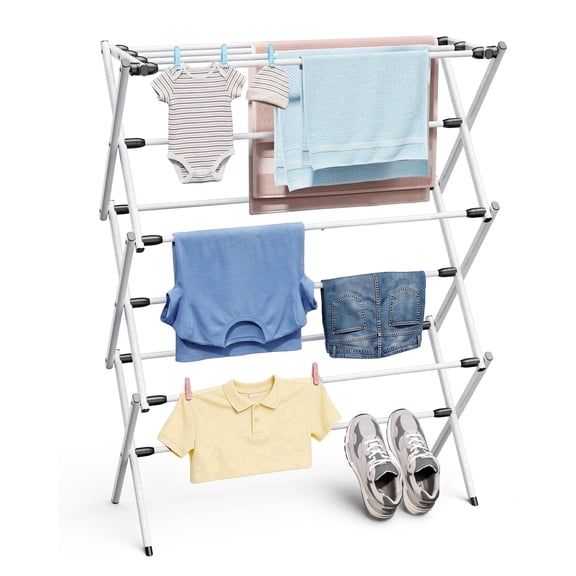
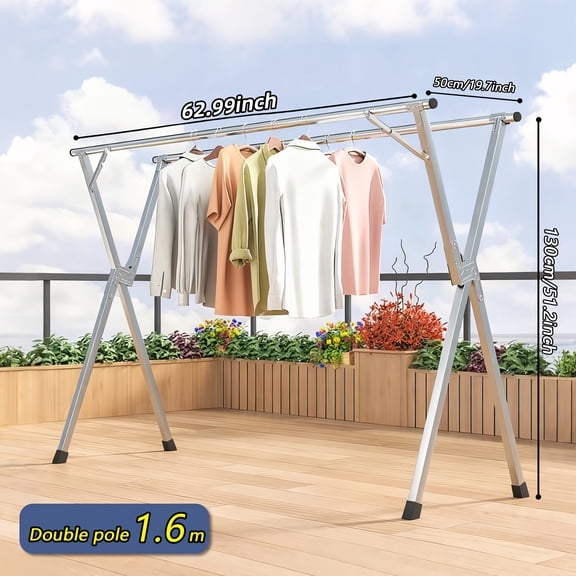
A hanger stand for clothes gives you flexible air-drying space for delicates, sweaters, and daily laundry without taking over the room. Drying racks fit apartments, laundry rooms, and shared spaces where floor area matters.
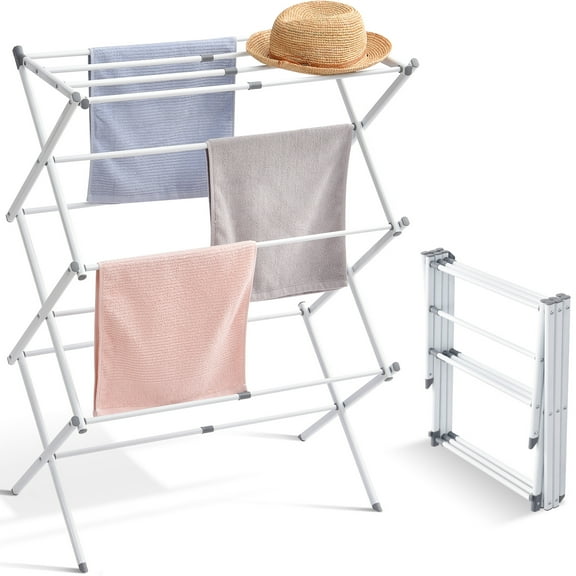
Many designs fold flat after use, which makes storage simple between loads. You can also use them for pieces that need shape retention instead of tumbling.
Hanger stand for clothes and drying rack essentials
A clothes drying rack helps you dry garments while reducing crowding on doors, chairs, and shower rods. That setup looks cleaner and keeps items organized by size, fabric, or family member.
A laundry drying rack also gives airflow around each piece. Open spacing helps shirts, socks, and towels dry evenly across the frame.
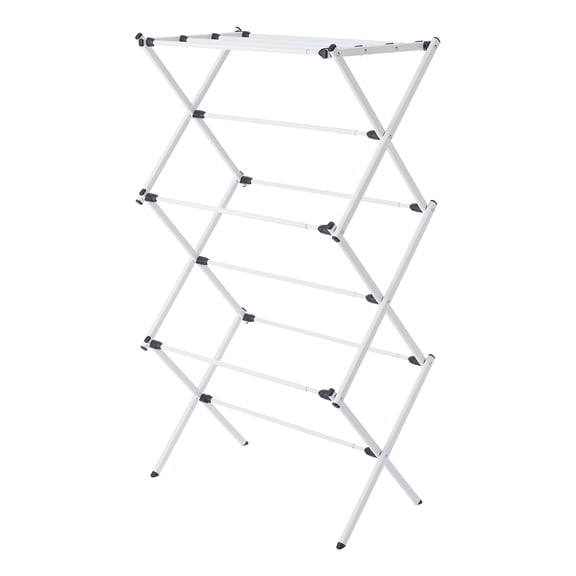
- Foldable frames fit small laundry zones and tuck beside a washer.
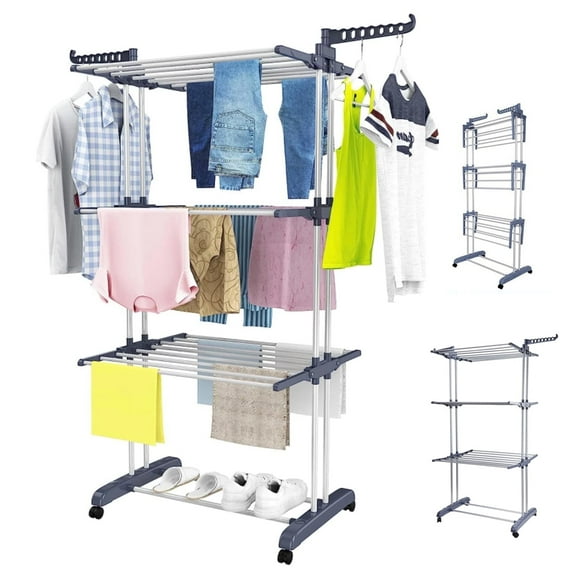
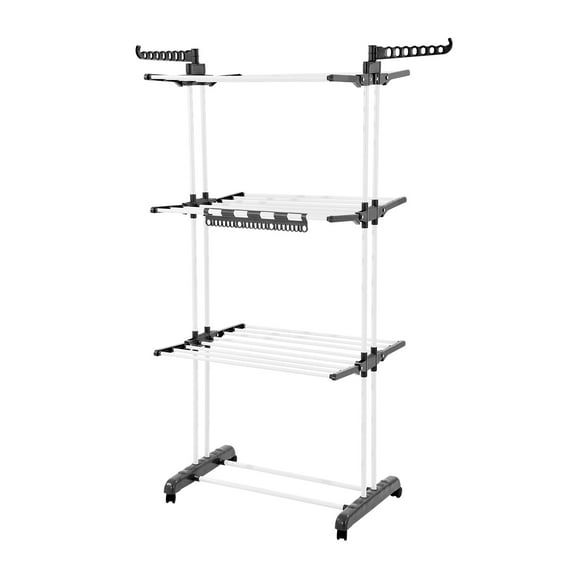
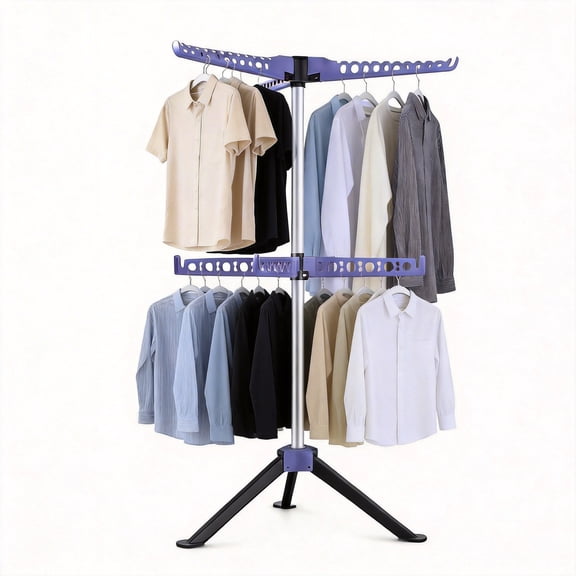
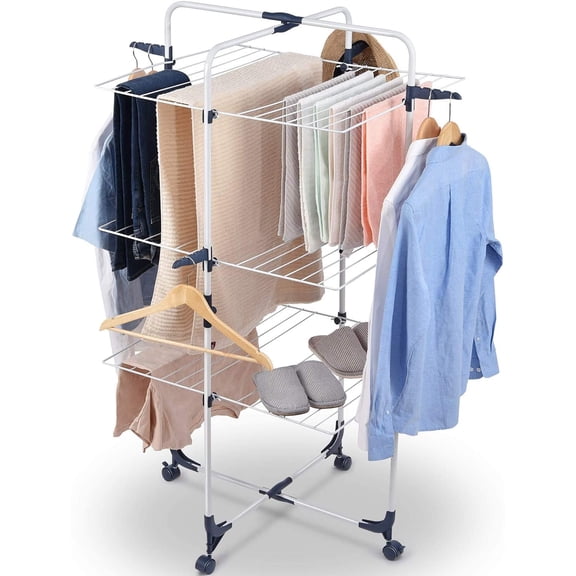
- Tiered layouts create more hanging room without using extra floor space.
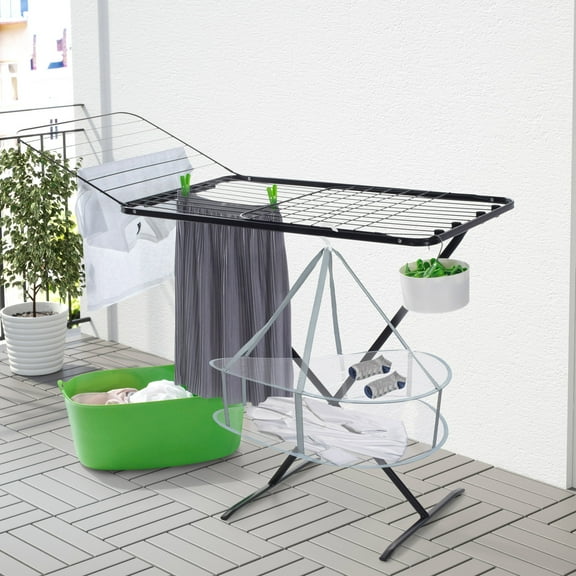
- Flat mesh shelves support sweaters and knits that need a level surface.
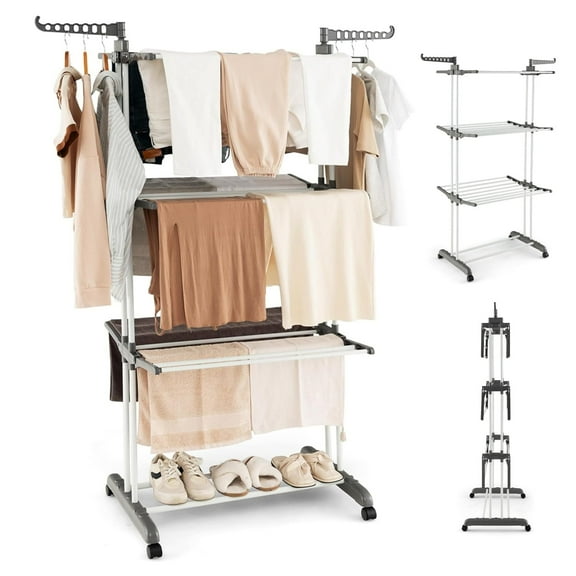
- Rolling options move from the laundry room to a sunny window with ease.
These benefits are especially helpful when you handle mixed loads. Baby clothes, activewear, and lightweight tops often need different drying positions on the same rack.
A cloth drying rack keeps those items separated and easy to reach. That makes sorting, hanging, and putting away feel more streamlined.
Clothes drying rack features that shape daily use
Material and layout affect how a drying rack performs in your space. Steel frames feel sturdy, while plastic details can keep the design lighter to move.
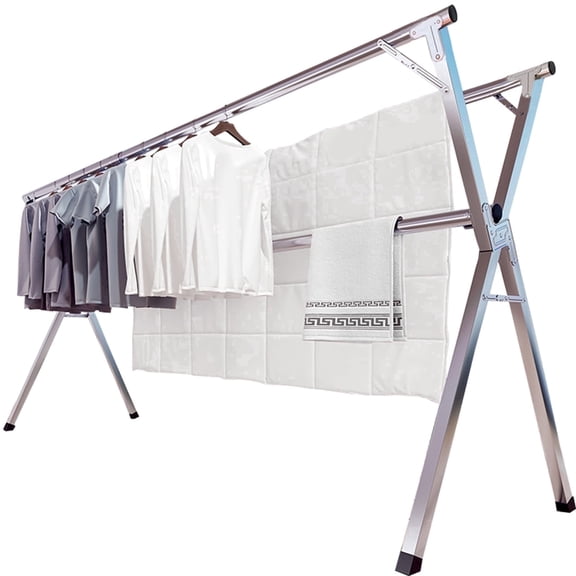
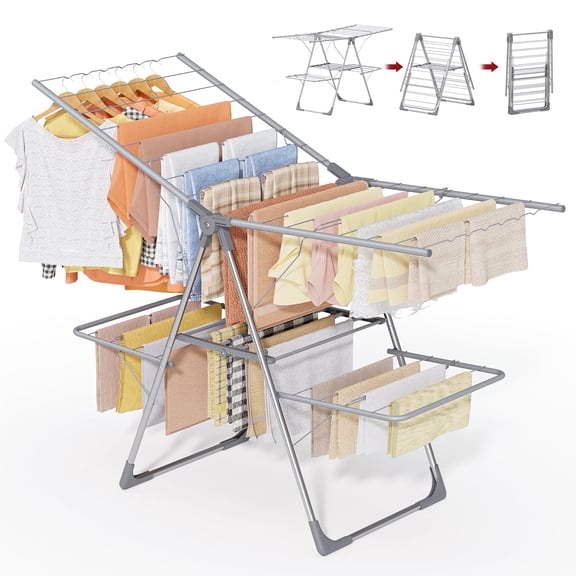
Some racks include coated bars for a smoother contact surface. Others add clip wings, shoe holders, or side arms for longer items.
Capacity is a key decision point for families and frequent washers. Wider bars handle bath towels, while narrow tiers suit socks, tees, and smaller pieces.
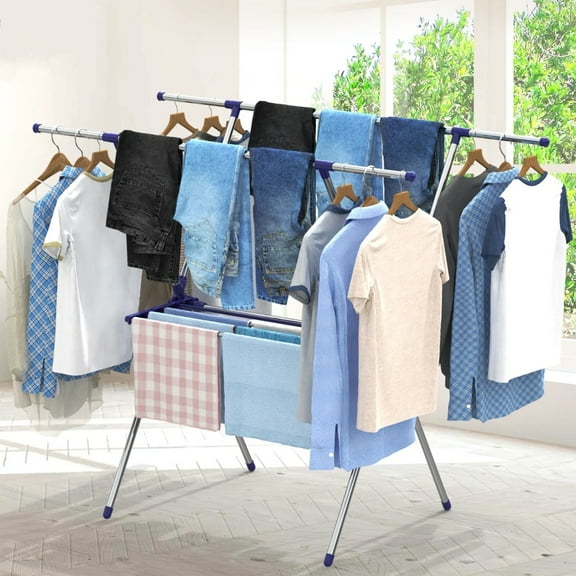
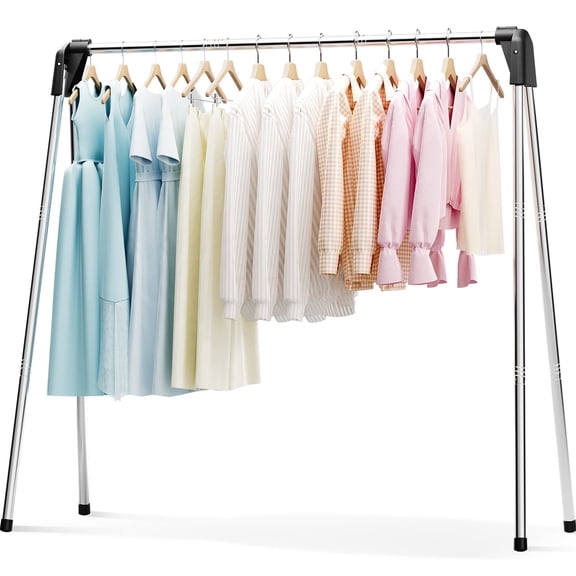
If you dry button-downs on hangers, look for extra height between levels. That spacing helps sleeves and hems hang freely.
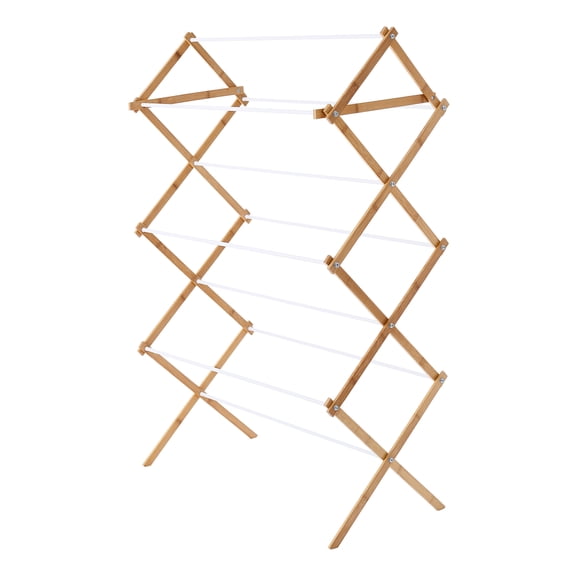
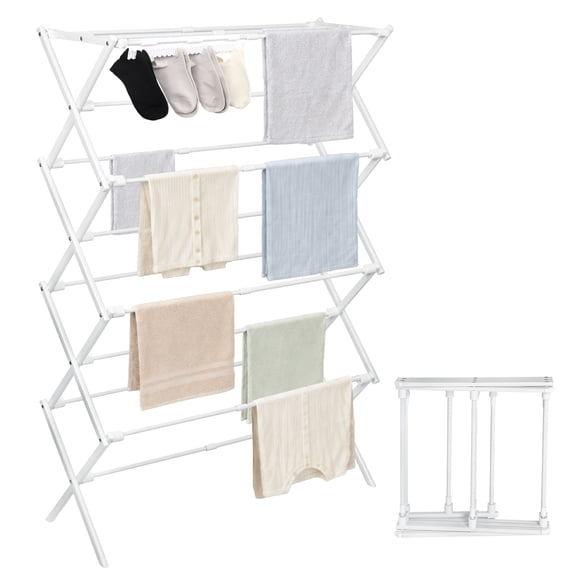
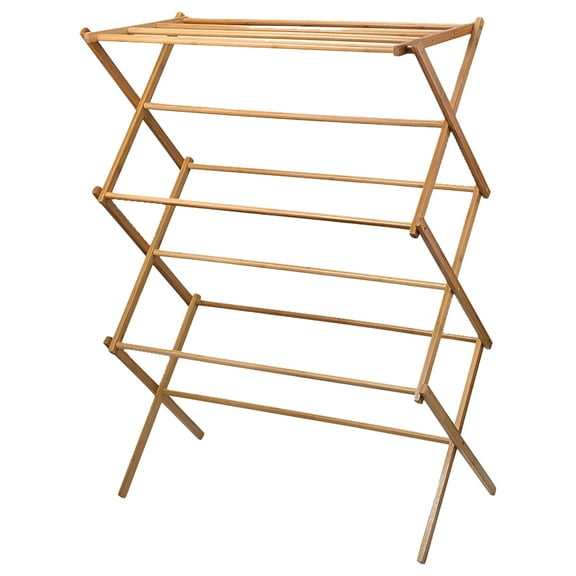
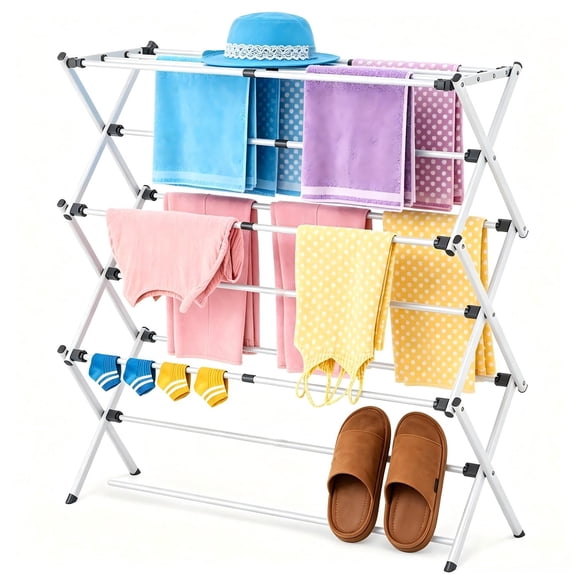
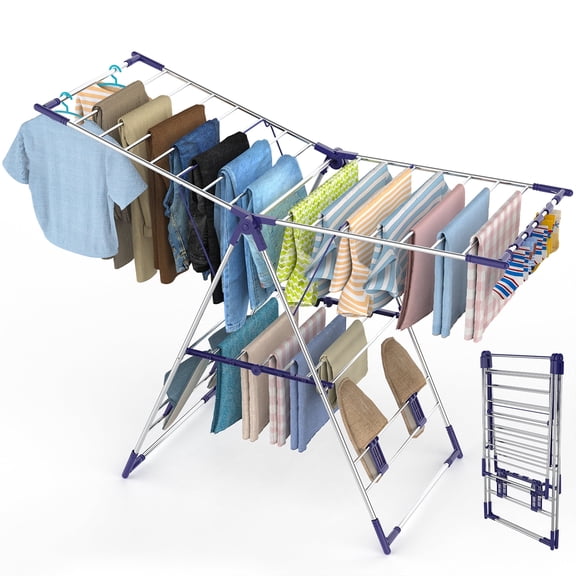
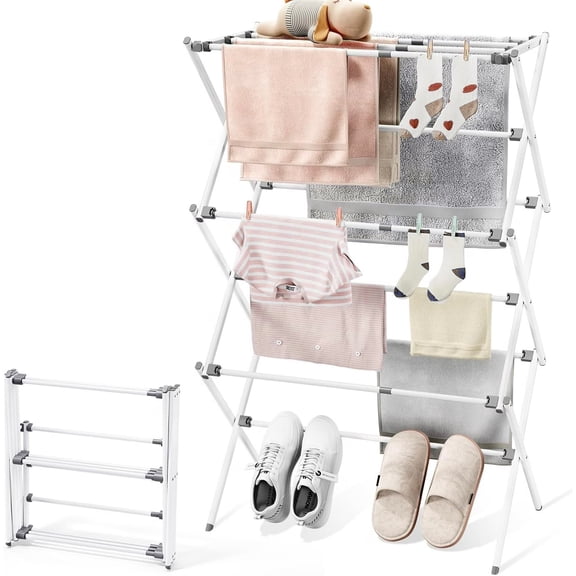
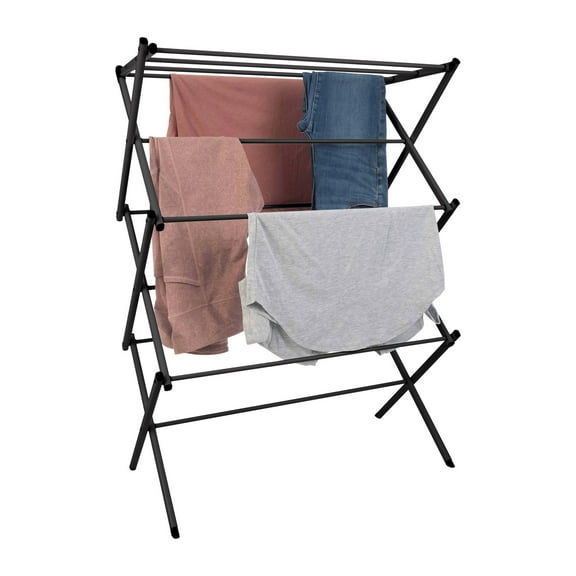
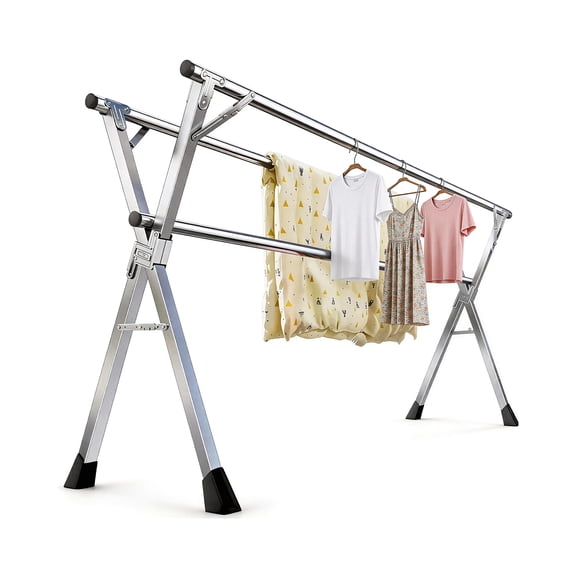
An indoor clothes drying rack often works well with a compact footprint. Accordion styles expand fast and collapse flat when the load is done.
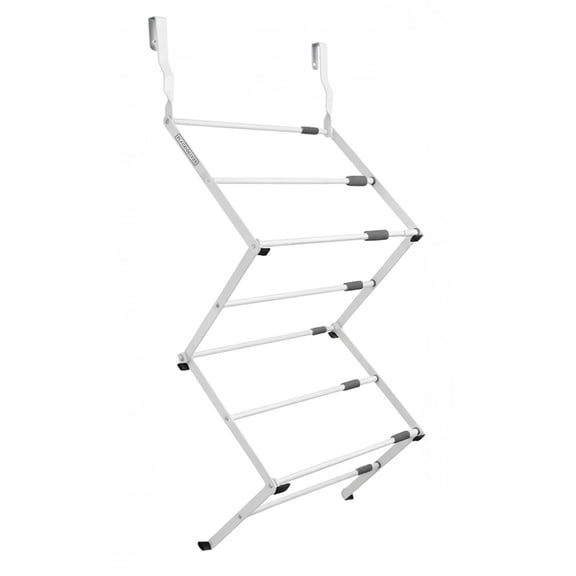
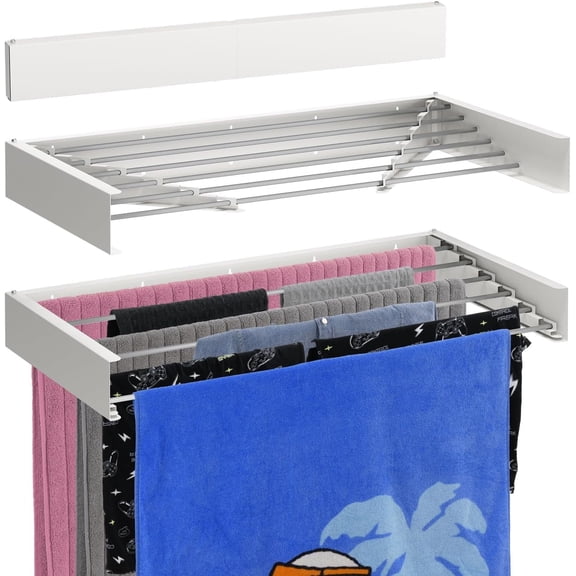
Vertical towers use height instead of width, which suits tighter corners. Wall-mounted options stay out of walkways and open only when needed.
Details can change how convenient the rack feels each week. Non-slip feet help keep the frame steady on tile or laminate.
Locking hinges support repeated opening and closing. Rust-resistant finishes and easy-clean surfaces also fit busy laundry routines.
Those touches matter when the rack stays in regular rotation. They also help the frame fit everyday laundry habits.
Laundry drying rack solutions for real spaces
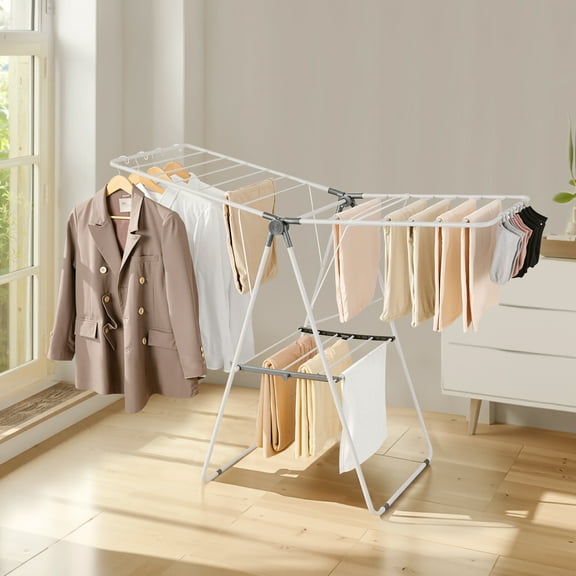
Different homes call for different drying setups. In apartments, a slim dryer rack can stand near a window or vent without blocking the room.
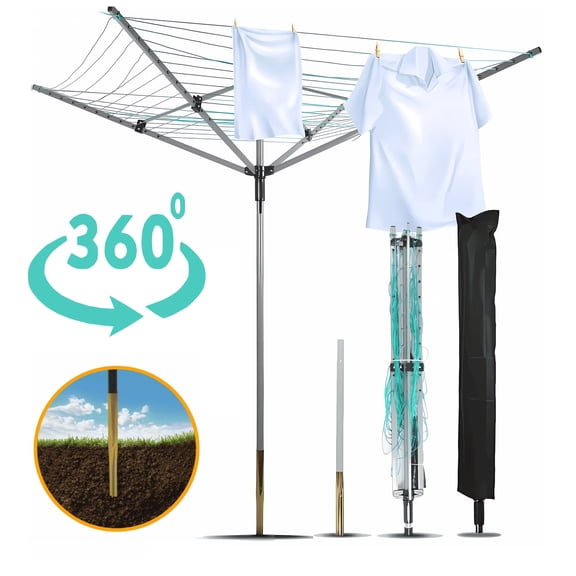
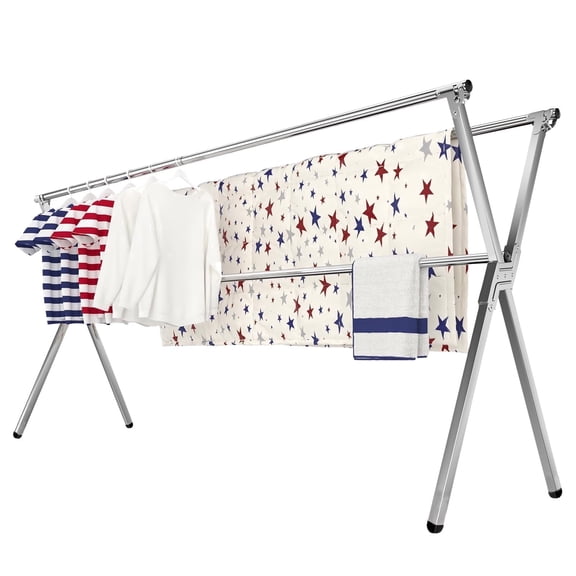
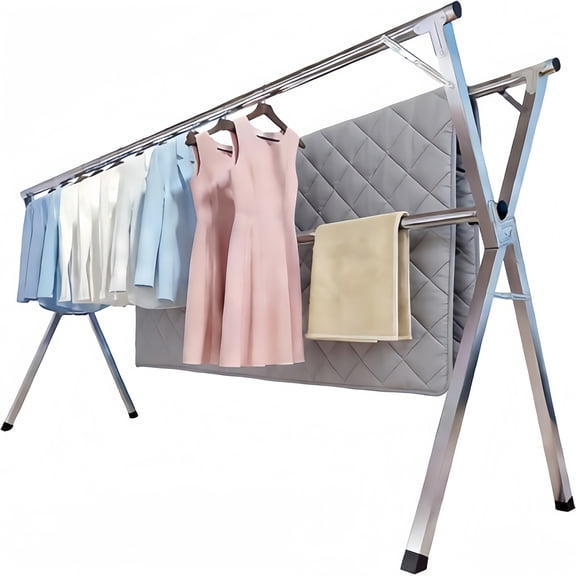
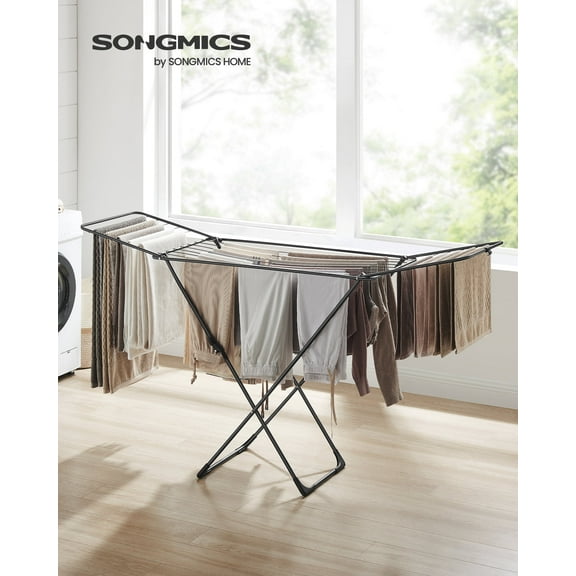
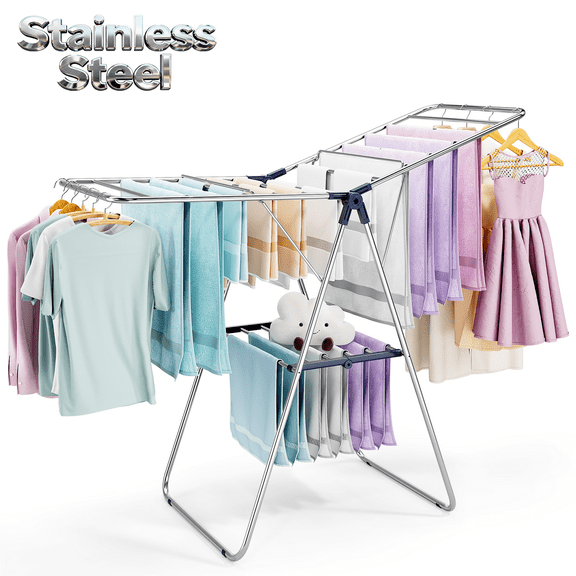
In larger homes, winged racks handle full loads of shirts, pants, and linens. Each style supports a different laundry rhythm.
For small-space living, folding and tiered designs are especially useful. They let you dry several garments vertically instead of spreading pieces across furniture.
That keeps common areas neater during the day. It also makes a drying rack clothes setup easier to manage in shared homes.
Families often look for a laundry drying rack with room for varied fabrics. Flat shelves hold sweaters, while bars support dresses, uniforms, and workout gear.
A hanger stand for clothes can also help with drip-dry pieces straight from hand washing. That reduces the need for improvised hanging spots.
If you handle specialty items, category details matter even more. Shoe platforms support sneakers, while clip sections hold socks and smaller garments.
Extra-tall frames make space for robes, long tops, and pants. Those features wouldnu't make sense on a standard storage shelf, but they matter here.
Choosing the right drying rack for your home
Start with where the rack will stand frequently. Measure floor space, then consider whether you need a folding frame, tower, or wall-mounted design.
Next, think about the fabrics you dry frequently. Sweaters need flat support, while shirts and dresses benefit from hanging clearance.
Also consider how often the rack will move. Wheels help in multipurpose spaces, while fixed feet suit a dedicated laundry room.
Look at bar spacing if you often dry thicker items like denim or bath towels. Wider gaps can improve airflow around bulkier fabrics.
A drying rack should fit your routine, not interrupt it. The right design keeps garments organized, supports delicate care, and uses space wisely.
With options for compact corners, full family loads, and flat-dry needs, this category helps you handle laundry with less clutter and more control.