

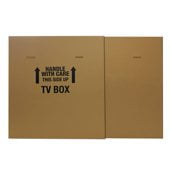
Cardboard Boxes in Moving Boxes










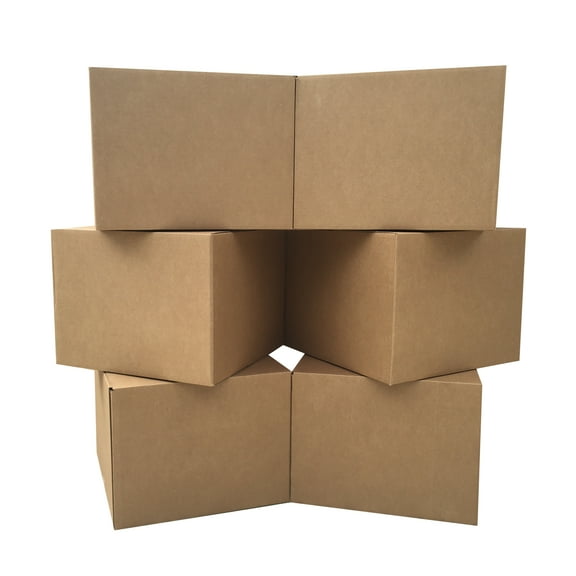
![17 7/8 x 23 7/8" Corrugated Cardboard Layer Pads 200#/ect-32 Kraft Sheets [Top Layering Protection] 50 Pack](https://i5.walmartimages.com/seo/17-7-8-x-23-7-8-Corrugated-Cardboard-Layer-Pads-200-ect-32-Kraft-Sheets-Top-Layering-Protection-50-Pack_cba31f04-86aa-4506-b442-48da62519ab0.83ce942446ac73d6cbda822451eb04e4.jpeg?odnHeight=576&odnWidth=576&odnBg=FFFFFF)







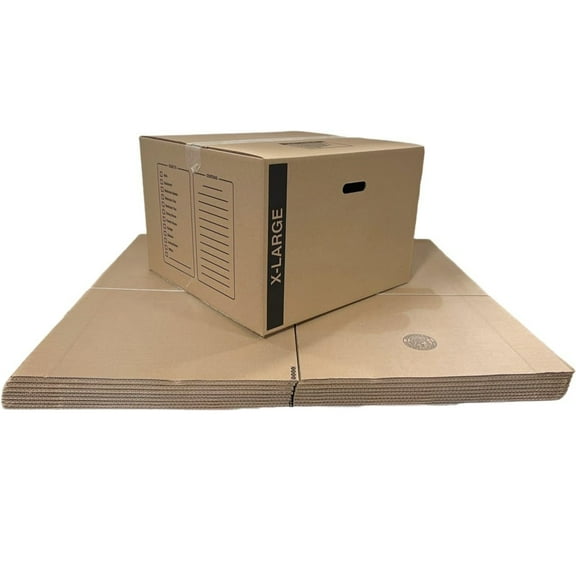

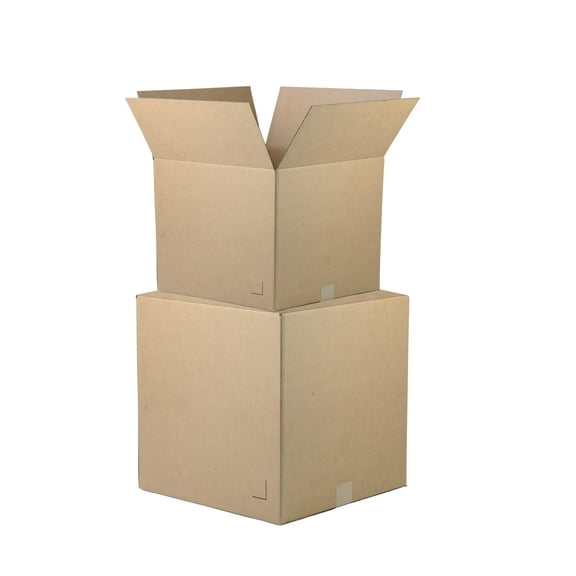


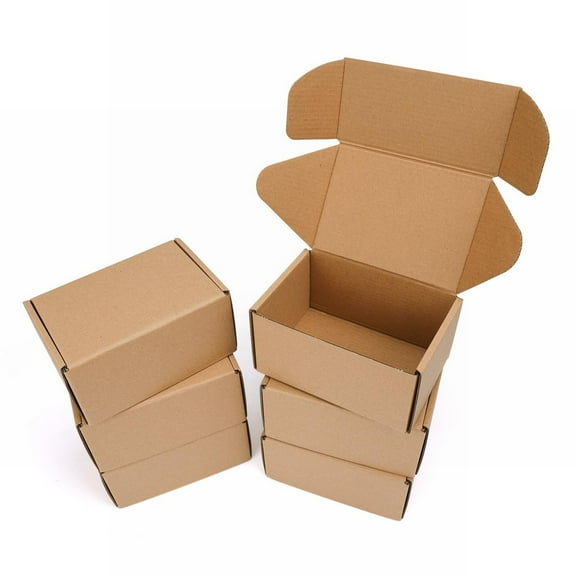


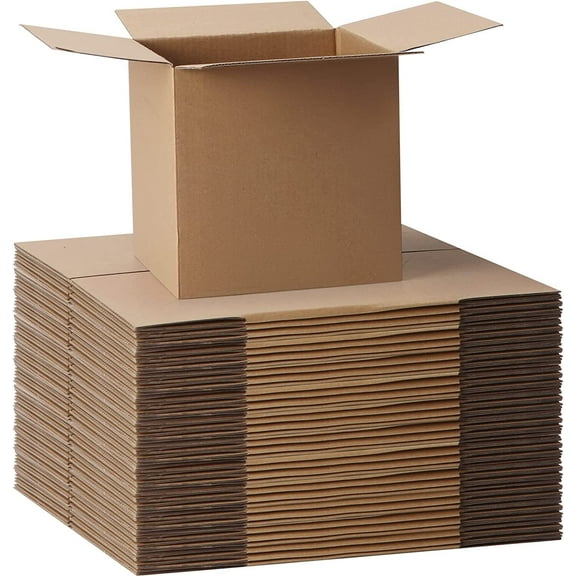

About Cardboard Boxes in Moving Boxes - Walmart.com
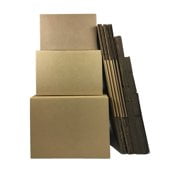
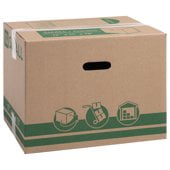
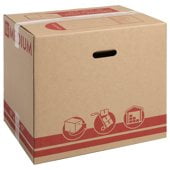
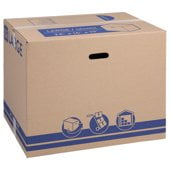
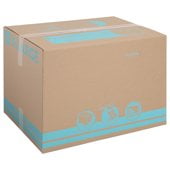
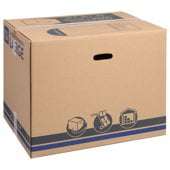
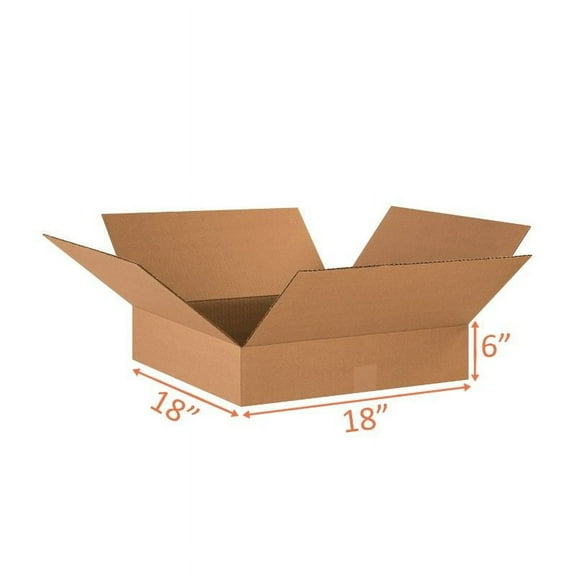
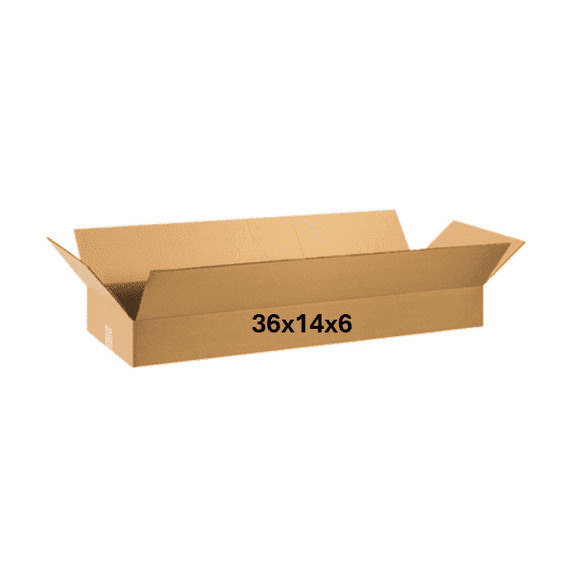
You can plan your move with moving boxes that fit each room, item type, and stacking need. You’ll find size choices, strength options, and specialty formats that support an organized packing plan.
When you compare box size, wall construction, pack count, and specialty designs, you can prepare with fewer last-minute gaps. You can also match your boxes with packing tape, bubble wrap, and moving blankets for a more organized setup.
Choosing the right moving boxes
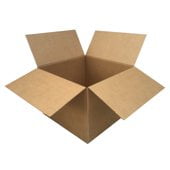
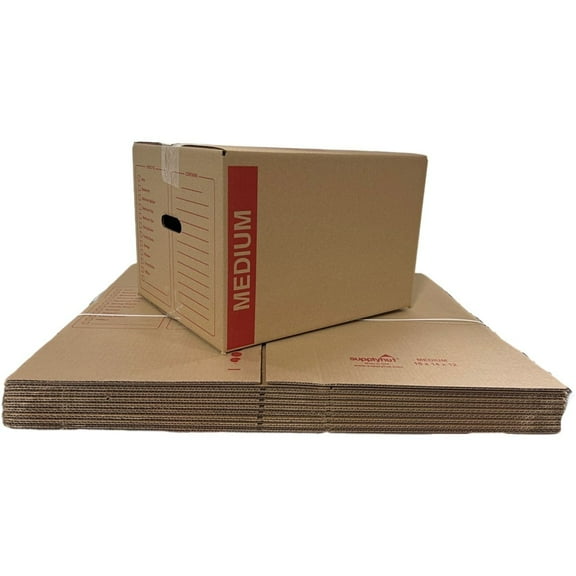
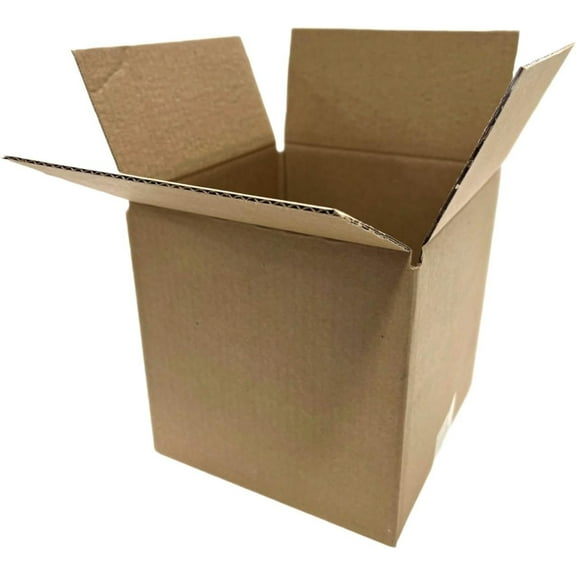
You’ll want to start with the number of rooms you’re packing and the weight of your items. You can often use small boxes for books, medium boxes for kitchen tools, and large moving boxes for lighter household goods.
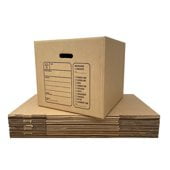
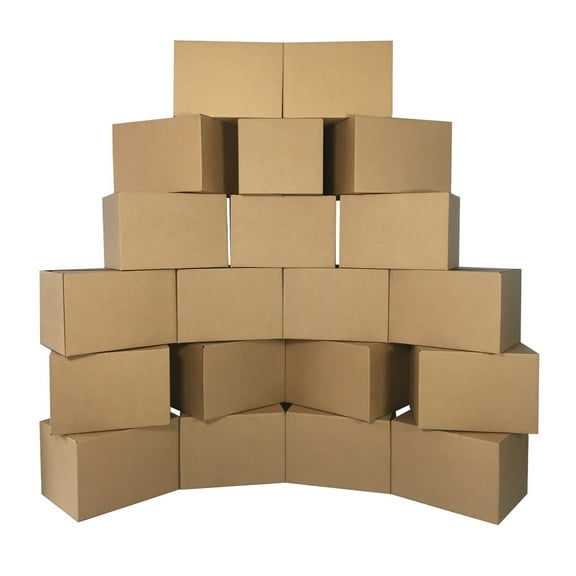
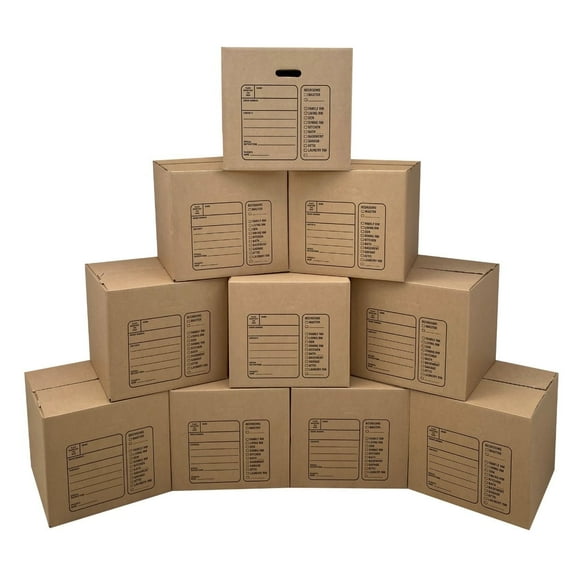
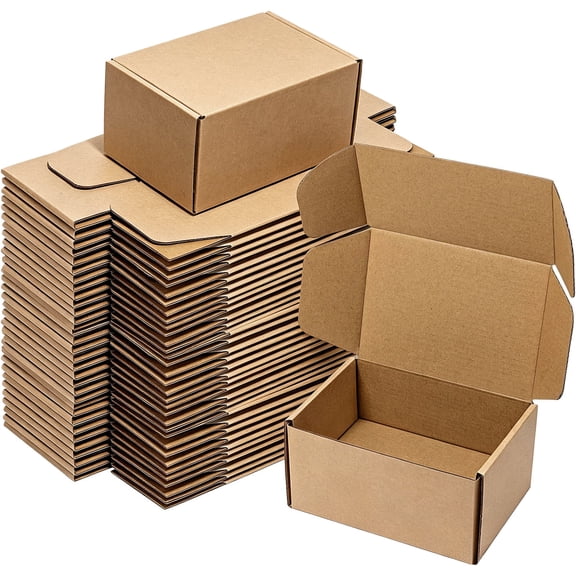
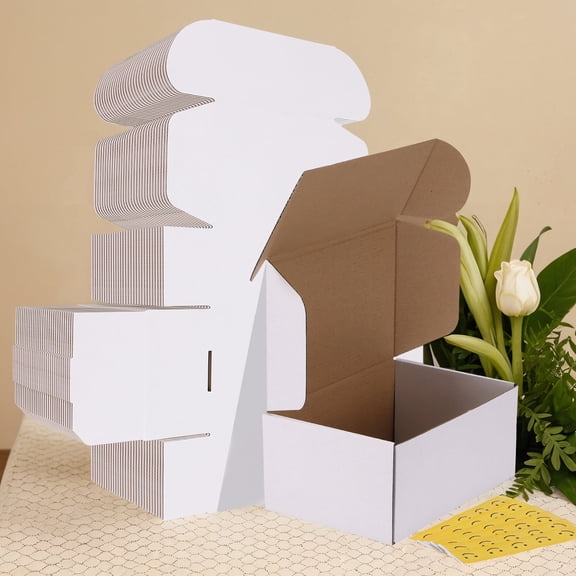
If you’re packing a studio or one-bedroom home, you may prefer smaller bundles or a moving boxes pack. If you’re packing several rooms, you can compare 10-pack, 20-pack, or moving kits for a complete setup.
You can keep loads manageable to carry when you match box size to item weight. You’ll usually want extra large boxes for bedding, pillows, and bulky but lighter contents.
- You can sort by small, medium, large, and extra large sizes for room-by-room packing.
- You can choose single boxes, multipacks, or moving kits based on how much you need.
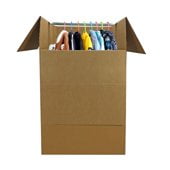
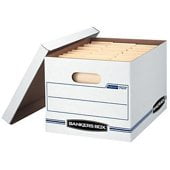
- You can add wardrobe boxes, file boxes, or dish pack boxes for items that need a specific shape.
- You can pair boxes with tape, bubble wrap, and stretch wrap for an efficient packing routine.
How to compare cardboard moving boxes and packing boxes
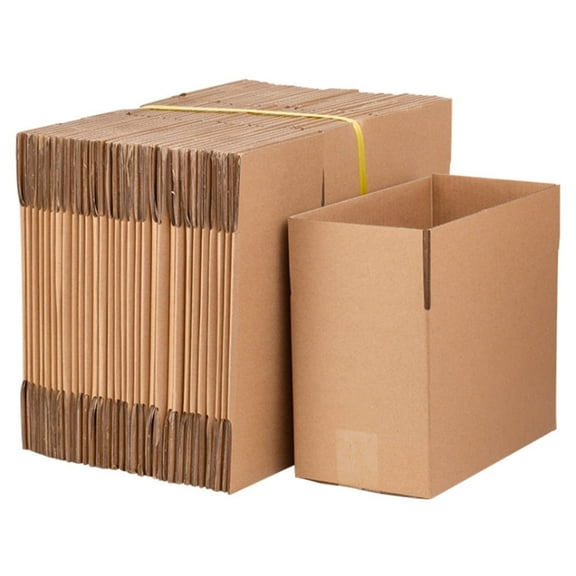
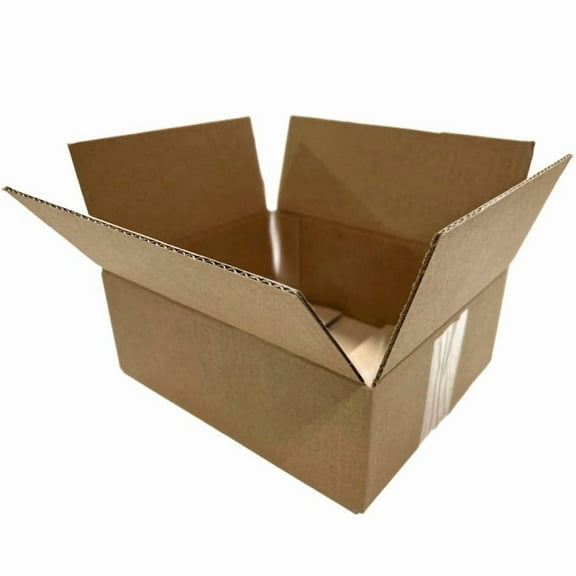
You’ll notice cardboard moving boxes come in different wall constructions that affect support and stacking. You can use standard single-wall boxes for lighter household items and shorter packing projects.
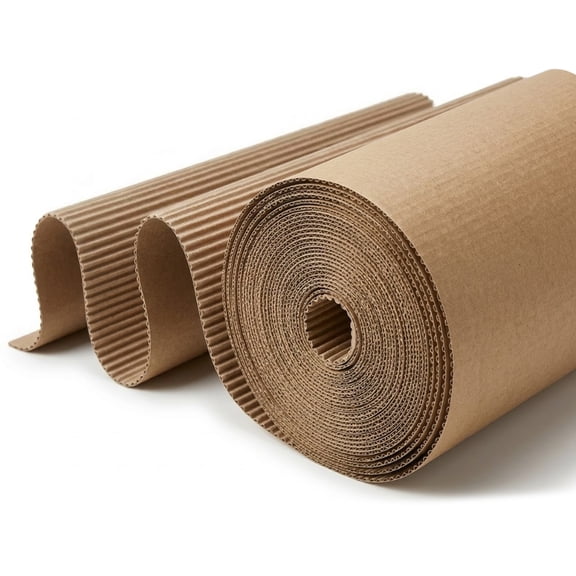
When you need more support, you may look for heavy duty moving boxes with double-wall corrugated cardboard. You’ll get stronger side panels that help you manage stacking weight and truck loading.
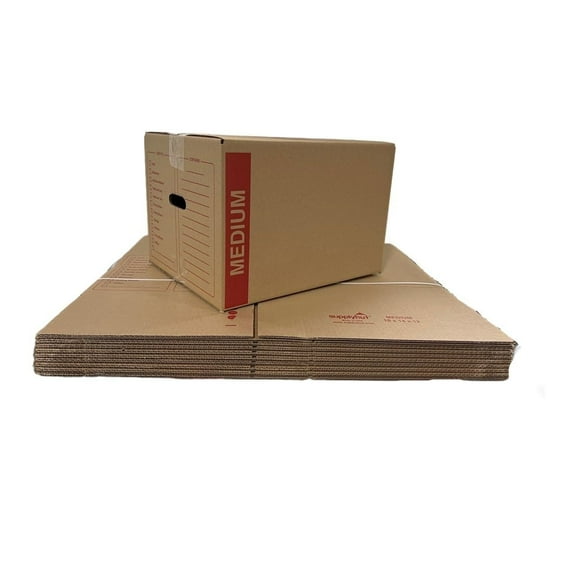
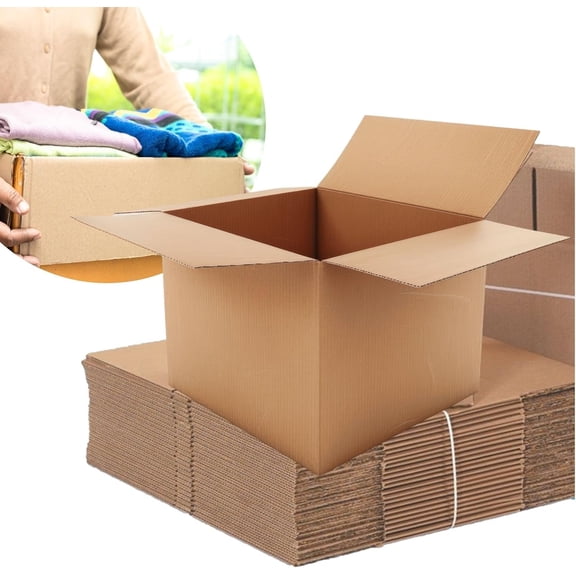
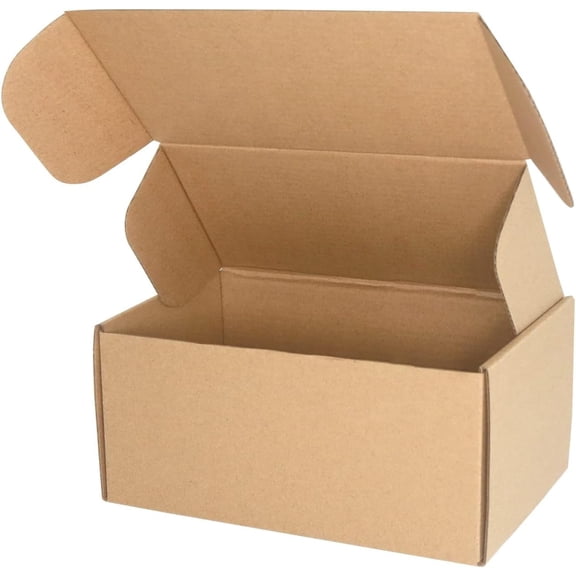
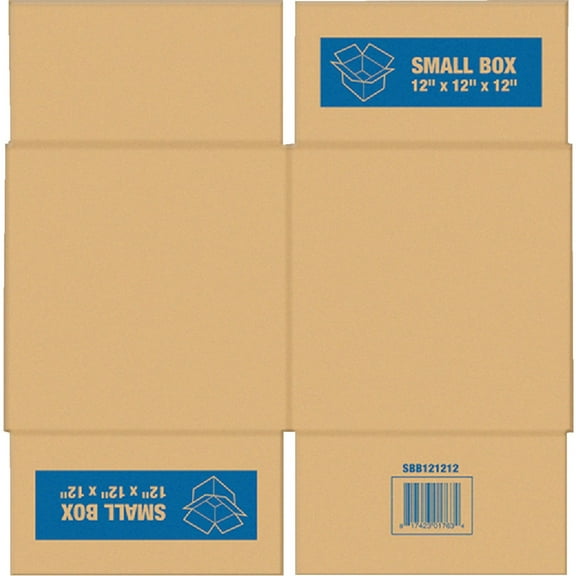
You can also compare flap style, fold lines, and assembly steps before choosing packing boxes. You’ll appreciate boxes that fold into shape quickly when you’re packing multiple rooms in one weekend.
If you’re planning to stack boxes in a hallway, truck, or storage area, wall strength matters. You can reduce box changes by choosing stronger construction for dense items like books, tools, or small appliances.
Choosing box size, strength, and pack count
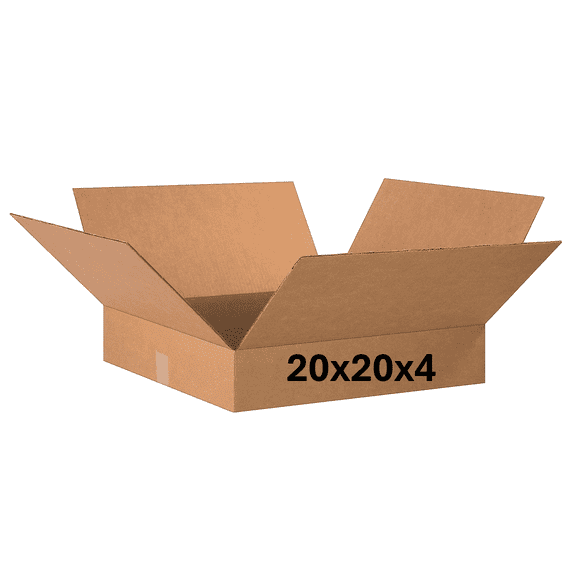
You can use box size as a practical planning tool for each room in your home. Small boxes help you control heavy contents, while medium and large sizes handle mixed household items.
For strength, you should compare standard single-wall and heavy-duty double-wall options side by side. You’ll usually reserve double-wall corrugated boxes for dishes, framed items, or longer stacking periods.
Pack count can also shape how you organize your move from the start. You can buy a single box for a quick replacement, or choose a 10-pack or 20-pack for larger projects.
If you want a more guided setup, you may compare moving kits that bundle common box sizes. You’ll spend less time guessing quantities when your move includes bedrooms, kitchens, offices, and storage closets.
When to use heavy duty moving boxes and specialty boxes
You can use heavy duty moving boxes when your items have more weight or need extra support in transit. You’ll often choose them for dishes, glassware, pantry items, records, and compact electronics.
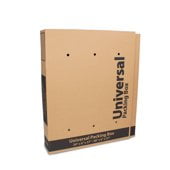
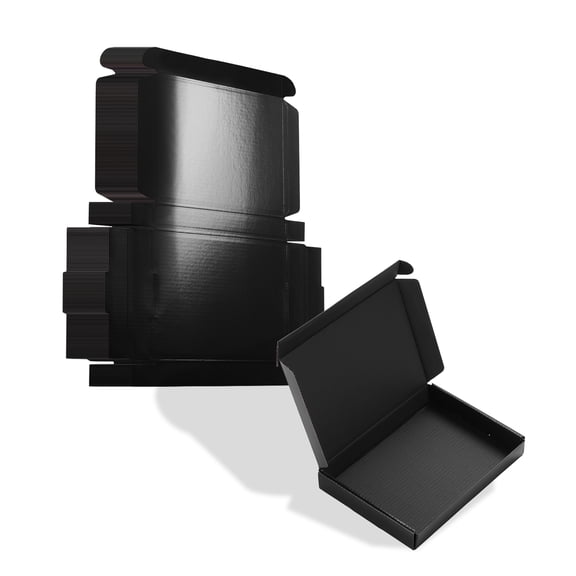
Specialty boxes help you pack awkward or delicate belongings without forcing them into standard shapes. You can use wardrobe boxes for hanging clothes, picture or mirror boxes for flat wall decor, and file boxes for documents.
When you’re packing a kitchen, you may look for dish pack boxes with thicker walls and divider-ready space. You’ll get a layout that suits plates, bowls, and stemware more neatly than a basic carton.
If you’re moving a home office, file boxes can keep papers upright and easier to sort later. You can unpack quickly when folders, labels, and records stay grouped during the move.
What to pair with moving boxes for an organized move
You can get more from your boxes when you match them with the right packing supplies. You’ll want packing tape for secure seals, bubble wrap for breakable items, and stretch wrap for grouped pieces.
Moving blankets can help you cover furniture edges and large items between box loads. You can use labels or markers to identify rooms, priority items, and boxes you’ll want to open first.
If you’re packing seasonal clothes, wardrobe boxes can work well with tissue paper and garment covers. You’ll keep hanging items more organized when you move them straight from closet rod to hanger bar.
For framed art or mirrors, you may combine specialty cartons with padding and corner protection. You can build a more orderly packing system when each item type gets the box shape it needs.
You can move with more confidence when your moving boxes match your space, contents, and packing plan. You’ll make loading, stacking, and unpacking easier with the right sizes, strengths, and specialty formats.