





Hexagonal Trampolines in Trampolines






About Hexagonal Trampolines in Trampolines - Walmart.com
Hexagonal trampolines give you a centered bounce pattern and a space-aware shape for your yard or workout room. You can compare backyard play models and compact rebounders by size, enclosure style, and frame build.
How to choose hexagonal trampolines
You should start by matching the trampoline to your main use. You may want backyard recreation for family play, or you may prefer indoor fitness and rebounding sessions.
Unlike many round layouts, the six-sided frame can guide your bounce toward the middle. You’ll also notice the shape can fit along fences, patios, or room edges with a tidier footprint.
When you compare sizes, you should measure your open area before choosing. You may see 38 inch, 40 inch, and 48 inch options for exercise use, plus 7.5 foot and 11 foot models for outdoor play.
- You can use a hexagon backyard trampoline when you want a directional bounce and a defined play zone.
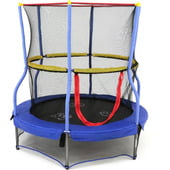
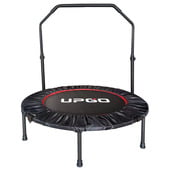
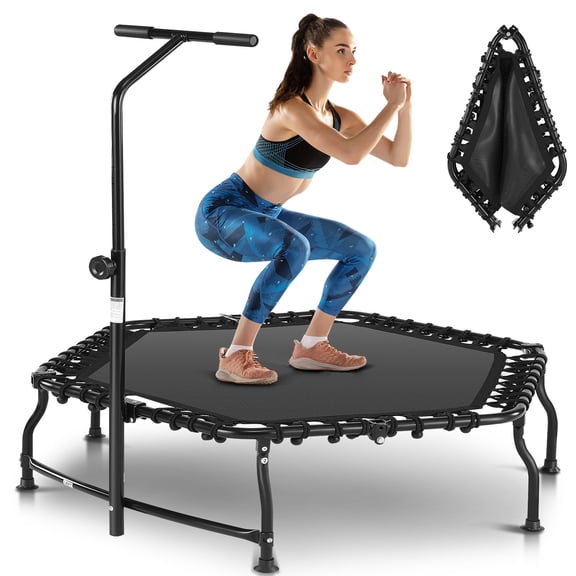
- You can pick a hexagon mini trampoline when you want compact cardio or rebounding in smaller indoor spaces.
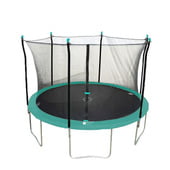
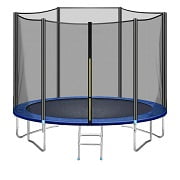
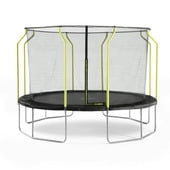
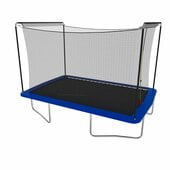
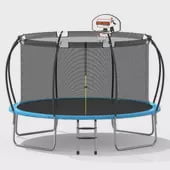
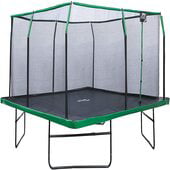
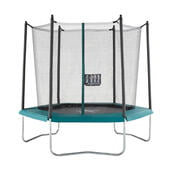
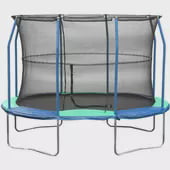
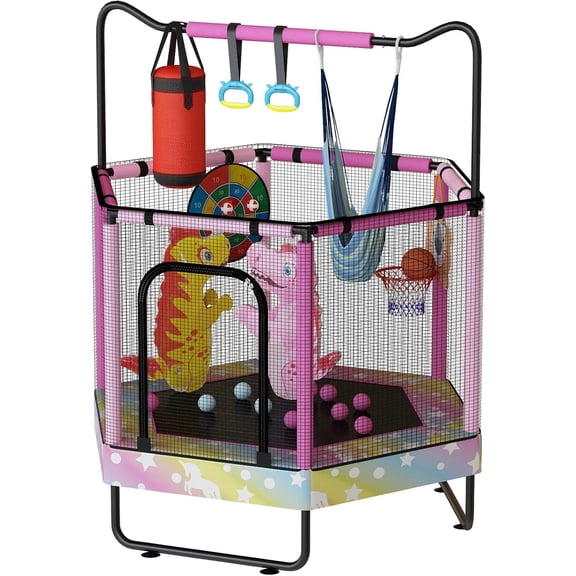
- You can choose a hexagonal trampoline with net when you want added enclosure coverage around the jumping area.
- You can compare handlebars, padded spring covers, and frame finishes to match your routine and setup.
Choosing size and use case
You should let your space and activity decide the right size first. A smaller frame supports indoor placement, while a wider frame gives you more room for outdoor jumping.
If you want hexagonal fitness trampolines, you’ll usually look at 38 inch to 48 inch sizes. Those sizes can suit rebounding routines, shorter stride patterns, and rooms where every foot matters.
If your plan centers on active outdoor fun, you may compare 7.5 foot and 11 foot frames. Those larger footprints can give you a broader jumping surface for shared backyard recreation.
You should also check weight capacity before you narrow your options. That number helps you match the trampoline to intended users and the style of movement you expect.
For exercise sessions, you may prefer a stable frame and a handlebar for balance-focused routines. For family setups, you may focus on open jump area, enclosure coverage, and yard placement.
What to look for in safety features
You should compare safety features as a practical part of daily use. A padded spring cover can help keep the frame edge visually defined, and a net can create a more enclosed jumping zone.
If you want a hexagonal trampoline with net, you should check how the enclosure attaches. You may prefer a design where the net connects in a clear, secure pattern around the six-sided frame.
Because enclosure net attachment style is decision-critical, you should inspect how poles, sleeves, and openings align. That detail affects how tidy the setup looks and how easily you enter the jump area.
You may also look for a handlebar on indoor rebounders. That feature can support controlled movement during stepping, jogging, or rhythm-based fitness routines.
For outdoor use, you should compare enclosure height and spring padding coverage. Those details matter when you want a defined boundary around a larger jump surface.
Comparing frame material and assembly needs
You should compare galvanized steel and powder-coated steel when you review frame construction. Both options focus your attention on structure, finish, and where you plan to place the trampoline.
If you want hexagon backyard trampolines, you may look for steel frames built for outdoor placement. You should also measure clearance above and around the frame before assembly starts.
The hexagonal shape fits differently than a round frame, so you should map each side in your space. That step helps you check corners, fence lines, and walking paths more accurately.
You’ll also want to review the number of parts and enclosure pieces before setup day. A larger model with a net usually needs more assembly space than a compact indoor rebounder.
For indoor use, you should compare folded or compact-friendly dimensions if listed. That detail can matter when you store your rebounder between workouts or move it between rooms.
Matching hexagon trampolines to real-life setups
You may want an 11 foot model with a net when your yard has open clearance and regular family use. That combination can fit shoppers who need a larger outdoor frame with a defined enclosure.
If your patio-adjacent yard has tighter boundaries, you may prefer a 7.5 foot shape. The six-sided layout can feel easier to position when you’re working around edges and fixed surfaces.
You might choose a 40 inch or 48 inch hexagon mini trampoline for indoor rebounding. Those sizes can suit a home workout corner, especially when you want low-footprint cardio equipment.
If your routine includes balance-led movement, you may prefer a handlebar model. That setup can support steady stepping patterns, light jogging motions, and structured fitness intervals.
You can also pair your setup with trampoline accessories that fit your model’s dimensions. You may compare anchors, replacement nets, and spring covers when you want your setup to stay complete.
When you compare hexagon trampolines carefully, you can narrow your choice by shape, size, and enclosure style. You’ll feel more confident picking a trampoline that fits your space and supports the way you move.